It seems that Tajikistan has become a new “economic miracle” in Central Asia, comparatively surpassing other countries in the region in terms of high & sustainable GDP and quality development which is significant. Hence its constant economic structural reforms are now paying their numerous dividends successfully “transforming” the lives of people and converting crises into opportunities.
Additionally, its growth rate of 8.4 percent during 2025 despite regional ongoing conflicting geopolitics and the complex global challenges of economic protectionism and disruption in global supply chains and their negative impact on the country’s economy, 2025 was a successful year for Tajikistan which vividly reflecting its “economic stability”, sustainability, diversity and resilience. Thus, it was the year of “economic self reliance”, qualitative industrialization and attracting more and more worker remittances and the FDIs in the country.
Moreover, in the past year, the country’s GDP reached 176.9 billion somoni (approx. US$19 billion), with a growth rate of 8.4 percent confirming a stable, strong and steady economic growth. The inflation rate was 3.5 percent clearly demonstrating a balanced growth consolidating diverse sectors of its macro-economy gearing towards greater socio-economic prosperity, qualitative industrialization, digitalization and modernization.
Interestingly, in 2025, revenues to the state budget increased to 60.3 billion somoni (approx. $6.48 billion), up by 7 billion somoni over plan rightly projecting economic vibrance and high productivity level of its economic drivers and their role in overall economic growth.
It is pertinent to mention that the foreign direct investment (FDIs) totaled 59.5 billion somoni (approx. US$6.3 billion), a 35 percent increase from 2024 clearly indicating numerous economic, industrial, manufacturing, renewables energy cooperation and last but not least infrastructure development potentials in the country. The total trade turnover grew by 14 percent, reaching 77.3 billion somoni (approx. US$8.31 billion). Thus, drastic increase in trade and FDI further confirm vast opportunities in Tajikistan economy, industry and service sector reshaping its future and fortunes simultaneously.
During 2025, 400 new industrial enterprises, 38 kindergartens, 214 general education schools, and 113 healthcare facilities were commissioned, creating 280,000 new jobs further strengthening its pace of befitting industrialization and social development in the country.
Now the President Rahmon has instructed the government to intensify efforts to achieve strategic goals and ensure economic growth of at least 8 percent which shows its bright prospects in the days to come attracting more and more inflows of FDI, joint ventures and trade propositions in the region and beyond.
The Statistical Agency reported that industrial production increased by more than 20 percent year-on-year, supported by mining, metallurgy, cement production, and food processing. Construction activity also expanded, reflecting continued state investment in roads, housing, and energy infrastructure.
The Tajk authorities highlighted ongoing work on the Rogun hydropower project as a central pillar of economic policy. The dam is expected to secure the domestic electricity supply and boost exports once fully operational, particularly to neighboring markets.
On the other hand, remittances remained a key contributor to economic growth in 2025. Transfers from Tajik migrant workers most of whom are employed in Russia, increased during 2025, supporting household consumption and helping offset external economic pressures.
According to the World Bank latest report remittances have accounted for a very large share of Tajikistan’s GDP, with personal remittances near 48 percent of GDP in recent years, leaving the economy highly exposed to labor market conditions abroad.
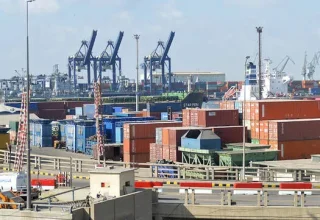
Moreover, exports of electricity, metals, and agricultural products rose, while imports of machinery, fuel, and construction materials expanded alongside investment activity. Regional media reported that China, Russia, and neighboring Central Asian states remained Tajikistan’s main trading partners in 2025.
It is a good omen that most recently, the S&P Global Ratings revised its outlook on Tajikistan to positive from stable. At the same time, it affirmed its ‘B’ long-term and ‘B’ short-term foreign and local currency sovereign credit ratings on the sovereign. The transfer and convertibility assessment remains at ‘B’ showing healthy prospects during 2026 and beyond.
Additionally, the positive outlook reflects the potential for Tajikistan’s balance of payments performance to prove stronger than forecast over the next one-to-two years. Tajikistan’s government debt will remain low and predominantly concessional, offsetting risks from the country’s structural vulnerabilities.
The outlook revision to positive primarily reflects improvements in Tajikistan’s external position over 2025. Income flows (mostly labor remittances) increased 47 percent year over year over the first nine months of 2025, supporting a sixth consecutive annual current account surplus of about 14 percent of GDP in 2025.
It is pertinent to mention that the recent poverty reduction has been driven by remittances and rising labor incomes, however, unfortunately Tajikistan is also facing growing inequality challenges, especially in rural areas which should also be rectified through initiating a holistic and comprehensive anti-poverty campaign in the country.
Interestingly, digital innovation provides Tajikistan with a way to overcome its geographic constraints and transform its trade environment minimizing trade costs by over 13 percent while improving efficiency, transparency, and access to global markets. Thus, effective digitalization can enable local businesses to meet delivery deadlines crucial for participating in global value chains.
It appears that the foreign investment in Tajikistan has increased by 35 percent confirming a strategic shift for the country and Central Asia Tajikistan posted a major economic milestone in 2025. This sharp increase reflects growing global confidence in the country’s investment climate and long-term development trajectory.
Definitely, the updated Law “On Investments and Stimulation of Investment Activity” (May 2025) has further strengthened investor protections, streamlined procedures, and aligned national legislation with international standards.
At the Dushanbe Invest 2025 Forum, more than 50 new agreements worth $4.1 billion were signed showcasing strong interest in energy, mining, infrastructure, and digital sectors.
Over 56 percent of inflows now come from outside the post-Soviet space from Gulf states, China, Türkiye, South Asia, and Western partners, indicating rising engagement from global partners and reducing reliance on regional economic cycles.
It is a good omen that Pakistan has achieved significant progress in trade and educational cooperation with Tajikistan, driven by initiatives of the Special Investment Facilitation Council (SIFC), marking a new chapter in bilateral relations.
Under a landmark agreement, Pakistan will export 143,000 tons of halal meat to Tajikistan, with the deal valued at $14.5 million. It is estimated that with effective trade facilitation measures, bilateral trade between the two countries could expand to $300 million, strengthening regional economic integration and cooperation.
Additionally, alongside trade both countries have taken notable steps in the education sector. A Memorandum of Understanding (MoU) has been announced to facilitate the exchange of students and teachers, aimed at promoting academic collaboration and cultural understanding.
According to official figures trade turnover between Tajikistan and Pakistan in 2025 amounted to $43 million which may be further enhanced and diversified by expanding bilateral cooperation in the fields of economy and investment, participation in international exhibitions, organization of business missions, and holding business forums.
In summary, Tajikistan has become new hot spot in Central Asia by achieving 8.4 percent of GDP, GNP, FDI and last but not least other economic indicators during 2025.
Moreover, its reported growth rates remain among the highest of all rated sovereigns globally. Strong real GDP growth of 8.4% in 2025, coupled with favorable exchange rate dynamics, have lifted GDP per capita to an estimated $1,650, a sharp improvement from $890 in 2019. Definitely, strong growth has also supported Tajikistan’s fiscal position with government revenue growing in excess of budgeted amounts.
It seems that the rising investment flows support, expansion of hydropower and energy exports, modernization of transport and logistics corridors, growth of industrial and manufacturing capacity, job creation, technology transfer, and SME participation has further strengthened its trade diversity, economic resilience and reduces dependence on external remittances long a structural challenge for Tajikistan.
Evidently, the government of Tajikistan has succeeded to position itself as an emerging clean-energy and logistics hub creating numerous befitting biliteral and trilateral economic propositions for the regional countries.
Definitely, Tajikistan’s policy makers have succeeded to improve governance, investor outreach, and regional integration. Hopefully through sustained economic growth this positive momentum could underpin a decade of accelerated economic transformation for Tajikistan and contribute to broader stability and growth across Central Asia.
Nevertheless, governance capacity, debt sustainability, and regional security must be managed carefully for sustaining and maintaining high GDP, GNP and FDI in the future.
The writer proposes that the policy makers of Tajikistan should further enhance its role in e-participation, online services, internet penetration, telecommunications capability, and technological readiness. Its e-commerce market is expected to grow at a modest 4.7 percent annual rate from 2025 to 2029, reaching only $28.4million by 2029.
The writer submits that sustaining high growth will require reforms to improve governance, strengthen the banking sector, and expand the role of the private sector in the economy. Moreover, heavy reliance on state-led investment must be gradually minimized giving chance to private sector and youth entrepreneurship.
The writer notices that job creation in higher-value sectors remains limited, contributing to continued labor migration and leaving the economy vulnerable to external shocks which should be further regularized through imparting technical education, nurturing high level of human resources and digitalization in the country.
Moreover, the writer pinpoints that Tajk government should further emphasize on industrialization, infrastructure development and expand energy exports by addressing long-standing structural constraints during 2026 and beyond. Thus, the policy makers should start shifting their reliance from low-value-added industries and worker remittances from Russia to other associated sectors to transform economy, industry, agriculture, water resources and regional trade.