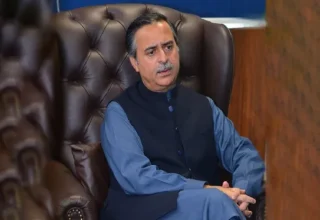
Pakistan’s maritime sector achieved a record profit of Rs100 billion ($360 million) in 2025 following a year of comprehensive reforms aimed at boosting port efficiency, cutting costs, and clearing long-delayed policies to position the country as a regional trade and logistics hub, Federal Minister for Maritime Affairs Muhammad Junaid Anwar Chaudhry said.
Describing 2025 as a “transformative year,” Junaid Chaudhry outlined more than two dozen initiatives across legislation, digitisation, infrastructure development, and human resource management.
“These reforms are modernising our ports, shipping, and fisheries to unlock the true potential of the blue economy,” he said, noting that Pakistan had aligned its regulatory framework with international conventions, including those of the International Maritime Organization and the Hong Kong Convention on ship recycling.
A central element of the reforms was the finalisation of the National Maritime Policy, which integrates shipping, ports, fisheries, and maritime security under a single framework to guide sustainable growth. The government also approved a National Shipping Policy aimed at expanding the Pakistan-flagged fleet to reduce reliance on foreign carriers, a longstanding drain on foreign exchange.
Stakeholder consultations on the National Fisheries and Aquaculture Policy were completed, targeting annual seafood exports of $2 billion and creation of two million jobs across coastal communities and allied industries.
Operational performance at Pakistan’s main ports also improved. Karachi Port handled a record 54 million tonnes of cargo, and average vessel dwell time was reduced by 24 to 36 hours through better coordination among port authorities, customs, and other agencies, achieving an average turnaround of five days in line with regional benchmarks.
Cost-cutting measures delivered substantial savings, including Rs70 million per month from reduced overtime at Karachi Port Trust and billions in human resource savings through the abolition of 2,152 redundant posts. Land recovery efforts reclaimed approximately 150 acres of encroached land at Karachi Port Trust and Port Qasim Authority, valued at Rs110 billion, with an additional eight acres recovered at Port Qasim.
The first bunkering facilities were established at Karachi and Port Qasim to save foreign exchange and attract transhipment traffic. A ferry service for passengers and cargo was launched for the first time to improve coastal connectivity and provide a lower-cost transport option for goods. At Gwadar, 72 acres of free-zone land were handed to operators, while bids were invited for a 100-acre off-dock terminal to draw transit trade from Central Asia.
Junaid Chaudhry also announced the “Sea to Steel” project to create a green maritime-industrial corridor linking ship recycling at Port Qasim with domestic steel production, supporting economic growth while reviving Pakistan Steel Mills.
The minister introduced the Pakistan Maritime Century Framework 2047–2147, established an Artificial Intelligence Maritime Secretariat to monitor ports, and, with SPARCO’s support, began identifying potential sites for new ports. Digitisation was a cornerstone of the reform drive, including full e-office implementation, integration of the Pakistan Single Window with the Port Community System, and an electronic public asset disposal system.
Reforms extended to maritime education and social development, granting degree-awarding status to the Pakistan Marine Academy, creating an advisory body for deep-sea fishing licenses, and establishing an endowment fund for children from coastal communities.
Junaid Chaudhry noted that the initiatives align with several UN Sustainable Development Goals, including economic growth, infrastructure, responsible consumption, life below water, and strong institutions. The reforms are also enhancing the ease of doing business through tax incentives, public-private partnerships, and improved trade routes under the China-Pakistan Economic Corridor.
“Sustained implementation will be key to maintaining the momentum of these achievements, and the gains made in 2025 provide a strong foundation for turning Pakistan’s long coastline and strategic location into a durable blue economic advantage,” the minister concluded.