It seems that the year 2025 has been grappled with “Trumponomics” leading to ongoing unilateral trade & tariffs war with China, Global South and its allies alike in the world. It affected pace, productivity and progress of global economies in terms of easy & smooth trading, serious disruption in global industrial supplies chains and shipments because of decline in economic globalization and international cooperation.
Additionally, the US “Make America Great Again” (MAGA) movement, economic protectionism, decoupling, delinking and wrong notions of overcapacity of China has badly disturbed its consumer, treasury, industrial and services sectors and short terms revenue gains have proved unsupportive and unproductive for its own industries, communities and governance demanding revisiting of its economic, fiscal, monetary, exports and international engagements policies.
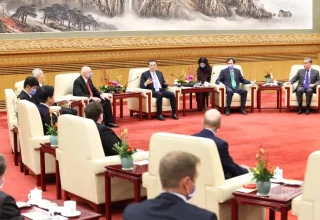
However, the Trump and Xi presidential meeting in South Korea somehow stopped further derailing of international trading and economies ties and gave the message of constructive competition and meaningful cooperation for the world.
Additionally, re-adjustment of trade and exports policies of many countries seems to be a geopolitical maneuvering instead of promotion of real geo-economics around the globe. Thus poverty, unemployment, decline in investments and qualitative industrialization have been further compromised and compressed.
In general, the world economy will remain under severe pressure from the ongoing power politics in Russia-Ukraine conflict, military alliances in South China Sea disturbing global blue economy, anti-China partnership in Asia Pacific, Latin America and African continent have confusing signals for regional as well as global economies.
It is predicted that the global economy may achieve an average GDP 3.1 to 3.2 percent growth during 2025 because of increasing geopolitical end games and rise to power politics promoting win-lose equations around the globe. Thus policy uncertainty, especially around international trade, shipments, qualitative industrialization, investment and joint fight against climate change will remain a major concern.
In nutshell, the US trade policy dominance would continue to create disruptive factors and create unpredictability for businesses and markets. Furthermore, the US tightening immigration, visa ban on global students, withdrawal from climate agreements, and potential trade conflicts would significantly be reshaping the global economic landscape.
Moreover, surprisingly, the emerging economies leading by Uzbekistan, Malaysia, Singapore, Vietnam and Ethiopia will be economic stabilizers and facilitators in the world.
Ultimately China’s 14th five year economic achievements and prospective brightness of its 15th Five Year Plan would be a gravitational force to give certainty, foster mobility and productivity through innovation driven economic development model gearing by greater openness, modernization, digitalization, AI, and promotion of qualitative industrialization.
China’s continued economic stability and sustainability have rightly and timely realized by numerous international organizations to revise their GDP forecasts upward for 2025 and 2026.
It seems that China’s solid economic fundamentals, sufficient policy people, business and investment tools and ongoing structural reforms continue to position it as an undeniable gravitational and unshakable driving force in the global economy. Rightly, its emphasis on modernization, digitalization, AI and quality development ensures that it will remain a central pillar of global economic growth through 2026 and beyond.
On December 2, the Organization for Economic Cooperation and Development (OECD) raised China’s 2025 GDP forecast to 5 percent, also up by 0.1 percentage point from its earlier estimate. These upward trends confirmed by the World Bank as well demonstrate the diverse, resilient, transformed, digitalized and modernized foundations of China’s macro-economy, which continues to mitigate prevailing geopolitical risks effectively. Standard Chartered further lifted its forecast for China’s 2026 growth from 4.3 percent to 4.6 percent, attributing the rise to gains in total factor productivity (TFP) and sustained export strength.
Moreover, the International Monetary Fund (IMF), in its latest World Economic Outlook report, upgraded China’s GDP growth forecast to 5.0 percent for 2025 and 4.5 percent for 2026, reflecting upward revisions of 0.2 and 0.3 percentage points, respectively, compared to its October projections. These revisions highlight the impact of sustained structural reforms, policy stimulus measures and lower-than-expected tariffs on Chinese exports, all of which strengthened China’s industrial capacity and export performance throughout 2025. Similarly, the Asian Development Bank (ADB) increased its 2025 forecast by 0.1 percentage points, citing resilient exports and continued fiscal stimulus.
It is obvious that a stable and reliable growth trajectory, fast-evolving innovative momentum and a steadily expanding openness jointly define a new place for China’s economy’s role in the global economy. Certainly, high-quality development and high-level opening-up have become new connecting hubs and key drivers of China’s economy, also reflecting the global trend of shifting growth engines
Favorably, China’s economy has maintained overall stability with steady progress, injecting valuable certainty into the world economy. China’s economic philosophies and practices offer important insights for addressing global economic challenges.
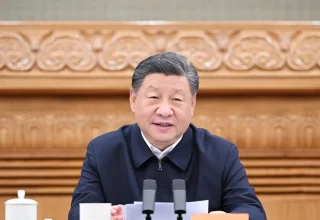
Chinese leaders holding the annual Central Economic Work Conference in Beijing on December 10 and 11 supervised by President Xi Jinping rightly emphasized the principle of “pursuing progress while ensuring stability,” focusing on improving economic quality and effectiveness. Eight core tasks were outlined, including boosting domestic demand, promoting innovation, deepening reform and opening-up, advancing low-carbon development and improving people’s livelihoods. These directives reflect China’s economic confidence, policy clarity and renewed momentum, offering stability and opportunity for the global economy.
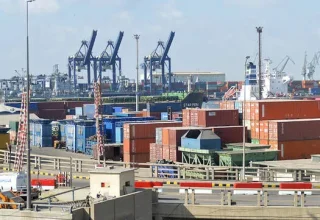
To conclude, China remains the factory of the world, its manufacturing capacity in green economic transition has been unmatched by every second/third solar panel being built in China. Its manufacturing superiority in EVs, lithium batteries, green hydrogen power generation and humanoid and robotic sciences have produced ample opportunities for the world to stabilize their economies. Its share in global GDP and manufacturing capacity has been further enhanced from 30 percent. Its exports have successfully surpassed the benchmark of the US$ 1 trillion during 2025 despite the US trade & tariffs war.
Many published reports of Goldman Sachs, McKinsey, the Economist and other international organizations have already predicted a sturdy growth of the global economy during 2026 which may increase 2.7 to 2.8% in 2026.
Additionally, the US economic growth is expected to accelerate to 2.6%, while China’s GDP expands 4.8 to 5 % as strong exports outweigh weak domestic demand.
On the other hand, the euro area economy may increase 1.3%, owing to fiscal stimulus in Germany and strong growth in Spain. Unfortunately, its continued imbalanced economic policies towards China cliff hanging with delinking, the structural weaknesses including demographic decline, overregulation, and high energy costs would remain major issues for the EU economies during 2026. Nevertheless, expected economic stability in Southern Europe would be a relief for it.
On the other hand, the US Federal Reserve is going to reduce its policy rate by 50 basis points to 3-3.25% in 2026. The UK central bank may also reduce rate cuts to 3% by the third quarter of 2026. The European Central Bank, by contrast, is expected to hold policy rates steady as inflation falls.
As compare to Western economies, China’s economy has institutional advantages as a socialist market economy, demand advantages due to its vast market, supply advantages thanks to a well-developed industrial system, and talent advantages with an annual output of five million STEM (science, technology, engineering and mathematics) graduates, which ensure the sustainable development of the world’s second-largest economy and make it an anchor of certainty and stability for the world economy which will be further strengthened during 2026 and in future.
China’s commitment to multilateralism, free trade, inclusiveness and support for WTO reform offers crucial strategic stability to the international system would be attractive to Global South and all the members of the BRI, SCO and BRICS.
It appears that innovation-driven development would be an inescapable trend during 2026 and beyond for the global economy in which China’s economy’s new quality productive forces mainly modernization, digitalization, AI Plus, quantum technologies, green advancements, robotic sciences and openness through innovation and qualitative industrial development would be catalyst.
It is a good omen that in the latest Global Innovation Index 2025 rankings, China entered the top ten for the first time and remains the highest-ranked among the 36 upper-middle-income economies.
Moreover, China’s profound changes in industrial patterns and economic structures through scientific and technological innovation would also be beneficial for the global economy during 2026 and beyond.
Furthermore, China’s development model based on technological innovation and grounded in the real economy would be an important trend in the transformation and upgrading of the global economy.
Interestingly, its promotion of structural reform through greater openness and pursuing win-win outcomes through constructive international cooperation, would further support an open world economy in response to the rise of unilateralism and economic protectionism, providing effective alternatives and solutions for improving global economic governance. Through the further strategic expansion of the Belt and Road Initiative, SCO, BRICS, free trade zone construction, the annual China International Import Expo and expanding visa-free access, China would be a regional stabilizer and global facilitator through high-level opening-up.
China’s economy is expected to reach around 140 trillion yuan (US$19.8 trillion) during 2025 as the 14th Five-Year Plan (2021-25) is set to approach a successful conclusion. Thus China’s opportunities are a global dividend.
Hopefully, during the 15th Five-Year Plan (2026-30) period, China will continue to advance high-level opening-up and accelerate the cultivation and growth of new quality productive forces. Definitely, China’s economic development will bring new opportunities and inject fresh momentum into the global economy, while countries around the world will share the substantial dividends of China’s development through openness and deeper connectivity.
Optimistically, China’s special customs operations in the Hainan Free Trade Port (FTP) would create the greatest momentum, the greatest opportunity, and the greatest dividend for the region and the globe alike and will bring to the world during the 15th Five-Year Plan (2026-30) period.
China’s high-level market economy during the 15th Five-Year Plan period (2026-30) through a series of major initiatives will generate new momentum, attracting more foreign investment into China for production, operations, and reinvestment, and forming fresh drivers of development.
Its new quality productive forces, will provide strong momentum for global economic growth. Last but not least, China’s stable social and political environment will attract more capital.
- Recently, a meeting of the Political Bureau of the CPC Central Committee was held to analyze and plan economic work for 2026. The meeting sent a clear signal: next year will see the implementation of more proactive and impactful macro policies, continuous efforts to expand domestic demand and optimize supply, and the development of new quality productive forces tailored to local conditions. What is your assessment of China’s economic growth outlook for 2026? How should the Chinese economy navigate external uncertainties, and what new opportunities may it bring to the world economy?
The China’s Central Economic Work Conference was held in Beijing from December 10 to 11 highlighted the salient features of its macro-economy and its positive prospects in the days ahead, conveying a message of stability, sustain-ability, diversity, innovation, digitalization and openness to international markets and investors alike.
It is a good omen that Chinese policymakers are expected to further strengthen the dual circulation model, focusing on strong domestic demand and exports through increasing international trade, aiming for around 5pc economic growth.
Despite US President Trump’s trade and tariff war, the Chinese economy demonstrated resilience, sustaining export momentum and emerging as a stable and reliable trading partner. Strong ties with BRI partners, the expansion of BRICS and participation in the Regional Comprehensive Economic Partnership have significantly supported export growth outside the US, particularly toward the European Union, ASEAN, Latin America, Central Asia, Africa and South Asia.
It seems that China’s ability to produce increasingly higher quality goods at lower prices will remain unmatched China’s ability to produce increasingly higher quality goods at lower prices remains unmatched during 2026 and beyond clearly demonstrating that it has the capability to deter high tariffs on its exports, as seen in recent trade negotiations with the US.
Moreover, the Chinese manufacturing sector will continue to grow robustly. There is an urgent need to rectify the property downturn. history.
A major priority for 2026 will be increasing domestic consumption through a balanced and diversified approach. China plans specific measures to boost spending, upgrade equipment on a large scale, promote consumer goods trade-ins and remove unreasonable restrictions in the consumer sector to unlock the potential of service consumption. It will remain resilient and stable during 2026.
In the first three quarters, final consumption expenditure contributed 53.5 percent to GDP growth nine percentage points higher than the previous year. From January to October, retail sales of consumer goods surpassed 40 trillion Yuan (US$5.7 trillion), marking a 4.3 percent year-on-year increase. The IMF highlighted the central role of domestic consumption in ensuring economic resilience and praised China’s commitment to maintaining an open and responsible economy.
Furthermore, innovation is expected to remain a key driver of China’s development in 2026 and beyond. The country aims to establish international innovation hubs in the Beijing-Tianjin-Hebei region, the Yangtze River Delta and the Guangdong-Hong Kong-Macao Greater Bay Area. Policy measures will prioritize enterprise-led innovation, strengthen intellectual property protection in emerging industries, expand service-sector capabilities and advance AI development through enhanced governance and tech-finance integration.
Its innovation clusters will continue to lead globally, with the Shenzhen-Hong Kong-Guangzhou cluster ranking first worldwide. Bloomberg Economics projects China’s high-tech sector including AI to grow from 14.3 percent of GDP in 2023 to nearly 19 percent by 2026.
China’s commitment to opening-up will remain a strategic advantage. The country plans to expand institutional and autonomous opening in the services sector, optimize the layout of free trade zones and advance the Hainan Free Trade Port. Despite global uncertainty, China’s foreign trade will show strong resilience.
China’s trillion-dollar trade surplus, expanding innovation landscape, strengthened domestic consumption and renewed policy direction will reveal the essence of a structurally evolving macro-economy.
China’s unprecedented rise demonstrates that global integration supported by modernization, technology and economic openness remains a powerful engine of growth. The country’s trajectory for 2026 and beyond signals continued resilience and opportunity, reinforcing its central role in shaping the future global economic order.
The writer suggests that Chinese policymakers should adopt an integrated approach to strengthen domestic demand through household consumption, business investment and government expenditure. Effective short-term economic and financial stimulus should be balanced with long-term structural reforms, as the property driven investment model has largely run its course. Demand should therefore be restructured toward household spending, supported by consumer-oriented industries.
The relatively low share of services consumption in China needs to be enhanced and activated. Policies promoting travel, tourism and dining services will be essential, along with strengthening service-sector labour supply and encouraging labour mobility across the country.
Good governance, financial transparency and fiscal policies must be revisited and implemented at the grassroots level. Expansionary fiscal policies should target key social needs, including healthcare, childcare, elder care and education. Lifting workforce productivity and investing in people should therefore remain a strategic priority
The writer advocates balancing the “invisible hand” of the market with the “visible hand” of government, creating a governance system in which an efficient market and a well-functioning government reinforce each other.
Reforms should target deep-seated constraints, limited innovation capacity, regional disparities and rising ecological pressures by es-tablishing evaluation systems based on quality and efficiency rather than sheer output. This would encourage firms to compete on innovation and sustainability. Stronger policy coordination aligning industrial, technological, environ-mental and market reforms should be pursued to ensure long-term momentum and stability.
A balanced market-government relationship is the need of the hour, supported by a coordinated governance system. Chinese policymakers should accelerate legislation to build a unified national market, strengthen fair competition rules and eliminate local protectionism, regional barriers and discriminatory entry requirements. Removing these obstacles will improve market circulation, unlock the potential of China’s vast domestic market and curb wasteful, low-efficiency competition.
Reforms should target deep-seated constraints, limited innovation capacity, regional disparities and rising ecological pressures by establishing evaluation systems based on quality and efficiency rather than sheer output. This would encourage firms to compete on innovation and sustainability. Stronger policy coordination aligning industrial, technological, environ-mental and market reforms should be pursued to ensure long-term momentum and stability.
A balanced market-government relationship is the need of the hour, supported by a coordinated governance system. Chinese policymakers should accelerate legislation to build a unified national market, strengthen fair competition rules and eliminate local protectionism, regional barriers and discriminatory entry requirements. Removing these obstacles will improve market circulation, unlock the potential of China’s vast domestic market and curb wasteful, low-efficiency competition.
Last but not least, a clearer division of central and local spending responsibilities, tax-system reform, expansion of local tax sources and enhanced tax administration can help establish an effective, transparent, rules-based and performance-oriented budgeting system. This would improve public-spending efficiency and enable fiscal policy to better support growth, structural upgrading, public services and risk prevention.