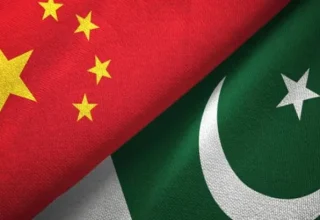
It seems that the fate of the CPEC Phase 2.0 urgently demands policy readjustments putting it again on the fast track. Unfortunately, whims and wishes of the incumbent government has not achieved any substantial development on CPEC Phase 2.0 because of many “multidimensional” reasons ranging from structure flaws, unproductive bureaucratic system, imbalanced policy making, isolated safety & security of the Chinese investing and working in the country and total failure of Pakistan Planning Commission and finance ministry to devise any “alternative” mechanism to “pay back” the long pending payments of the Chinese IPPs.
Emerging socio-economic preferences, geopolitical readjustments and last but not least, geo-strategic outreach has badly “derailed” the pace, productivity and progress of the CPEC Phase 2.0. Pak-US “Metals & Minerals” corporation has “annoyed” Beijing and also “dried” the Chinese investments. Moreover, inclusion of France, UK, Germany and Turkiye in minerals exploration has further “irked” the Chinese.
Furthermore, the increasing Pak-US ties are also fueling “speculations” of Islamabad’s shift from Beijing to Washington DC creating a sense of insecurity among the two “Iron Clad” brothers. The policy makers of Pakistan should “reevaluate” their geopolitical end gains and socio-economic profit & loss ratios before indulging into a new end game because variables of reliability, durability and trustworthiness have a “bitter” history in case of our alliance with the USA in the past.
Moreover, some intellectuals especially prominent security expert Dr Moeed Yusuf while delivering a keynote speech in the Margalla Dialogue 2025 floated an out of the box idea about “US-China” joint cooperation in Pakistan’s metals & minerals sector that would provide an ample opportunity for all the regional countries in terms of safety and security. However, due to increasing regional as well as global emerging metals & minerals geopolitics between US and China the scope of this kind of scheme of arrangement would not be materialized.
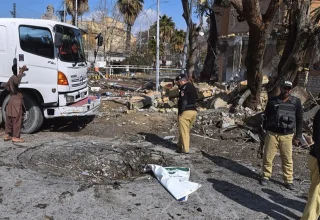
The deteriorating law and order situation in KPK, Balochistan and new surge in terrorism launched by TTP, BLA, MB, FS and most recent activation of ISIS in Afghanistan, Iraq, Syria and Australia and the East Turkestan Islamic Movement (ETIM) in the region have further slowed down development pace of the CPEC Phase 2.0 in the country. Although our armed forces and secret agencies are “striving” hard and their hot pursuits are successfully “neutralizing” terrorist sanctuaries in the country but still foreign sponsorship and the arrival of new international terrorist players from the Middle East have become a serious problem.
The unfortunate “assassination” of the Chinese workers at the border of Tajikistan through “drone attack” and gunned down in Afghanistan have clearly indicated the existence of “evil” proxies and predators working against the interests of Pakistan and China in Afghanistan and in the region.
It seems that Indian RAW, MI6 and new entrant Israel are “instigating” the young Balochs and investing even on young girls to strengthen their human suicidal forces specifically targeting Chinese and their investments in Balochistan, Gwadar. Hence a joint and “grand” anti-terrorism dialogue and mechanism among Pakistan, China and Afghanistan is the need of hour.
The big army heads and secret agencies of Islamabad and Beijing should hold a series of meetings to jointly “tackle” the emerging threats of drone attacks on the Chinese and chalk out a new security strategy.
The Financial Times news about “Pasni seaport” has also become a hot topic in our media and intelligentsia piqued badly to Chinese because of strategic investment and importance of Gwadar seaport. The timing and geographical intimacy of both ports are casting serious doubts in the minds of the Chinese about their future cooperation and investments in the country which needs to be clarified at the highest level.
Additionally, financial constraints have become a “troll” between both countries. The long pending dues of the Chinese private energy companies have “sucked” the prospects of new investments. Unfortunately, the policy makers sitting in Islamabad could not give any “alternative” financial solutions of payments to these Chinese companies due to which many JCCs did not achieve any “consensus” and road map for future projects in the CPEC Phase 2.0.
It seems that structural backwardness has put the pace of CPEC Phase 2.0 on the “back burner”. No substantial work is being carried out in building of pledged Economic Free Zones in the different parts of the country. Moreover, the political blame game about CPEC has started another round of futile “zero-sum narrative” building between Muslim League (N) and PTI.
It seems that “personified” politics are badly hurting the prospects of common people’s prosperity in the country and white elephant of Pakistan’s Planning Commission miserably failed to prepare any true plan for the revival of CPEC Phase 2.0 or attracting any substantial investments in the country. Hence constant decline in the inflows of FDIs is an alarming situation which needs to be rectified by all the stakeholders.
The deep existence of corruption and “Elite Surrender” as the IMF most recent report exposed is another invisible hurdle in the speedy recovery of the CPEC Phase 2.0. Outdated and “stereotypical” working style of bureaucracy and governance have forced foreign investors to stay away from our country. The prevailing economic model of growth is not creating any “space” for “industrious” people and the brain drain of the young generation should be an eye-opener for the policy makers.
The writer suggests that there should be no compromise on the safety & security of the Chinese workers and investors in the country which would boost confidence between two countries and save the “flat fall” of the CPEC Phase 2.0 in the country. Meaningful proposals of enhancing safety & security of the Chinese must be prepared and implemented not confined only to cosmetic statements and political rhetoric.
Hence formation of a “joint Pak-China drone surveillance system”, constant information sharing, joint anti-terrorism and out of the box proposal of implementing “Syrian Model” of stopping infiltrations and protecting their people must be installed within the territories of Afghanistan making a sense choice for the complete eradication of terrorism and terrorist activities in the region. Thus Chinese policy makers must use their socio-economic and geopolitical leverages over Taliban and TTA to start working on this workable solution for all.
The burning issue of pending dues of the Chinese energy IPPs may be resolved through the launch of “Panda Bond” in the “Chinese market” along with payment of Principle from the “excess liquidity” of the domestic banking industry. The finance ministry must ponder on it and try to gradually pay-back the pending dues of the Chinese private companies.
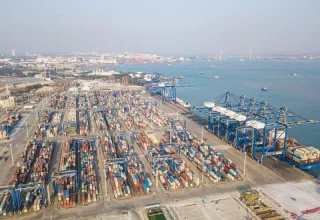
The policy makers of both sides ought to think beyond short term gains because Pakistan geographically is the shortest route for trans-regional connectivity between South Asia and Central Asia and its Gwadar seaport may also be effectively utilized for China’s imports and exports to Middle East and Africa in the days to come.
Undoubtedly, CPEC Phase 2.0 is a “blessing” and its early execution, implementation and completion is the need of the hour. Last but not least, the policy makers of both sides should also think beyond Afghanistan for “clubbing” of CPEC & BRI starting trade through Karakoram Highway to Xinjiang and Khorgos dry port and last but not least a jointly populated Wahkan Corridor would be a value addition.