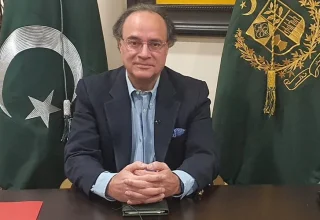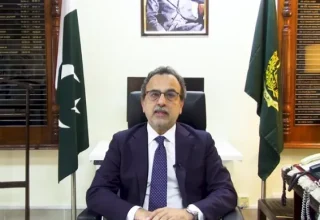
Federal Minister for Power Sardar Owais Ahmed Khan Laghari has announced ambitious plans to make Pakistan’s power sector fully digital, transparent, and consumer-friendly, while emphasizing the country’s transition to clean energy.
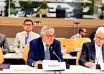
Speaking at the Asia Energy Summit organized by LUMS University, Laghari said Pakistan aims to generate 90% of its electricity from clean and green energy by 2035. “Pakistan’s solar revolution has become a global example,” he added, highlighting that 50 gigawatts of solar panels have been installed by the public themselves.
Currently, Pakistan generates 52% of its electricity from clean energy, marking a historic milestone, the minister said. Key priorities include privatization of DISCOs and reducing circular debt. Laghari also stressed the disproportionate burden of climate change on poorer countries, which contribute less to global emissions but face greater impacts.
Laghari described Asia as the center of the global energy transition, accounting for 48% of the world’s energy consumption, and noted Pakistan’s role as a rapidly growing solar market, having imported 17 gigawatts of solar capacity. In Balochistan, solarizing tube wells is helping address both water and energy shortages.
The minister also highlighted initiatives empowering consumers: “With our meter-reading app, customers are fully in control of their energy usage.” He added that Pakistan contributes less than 1% to global climate change but ranks among the top 10 countries most vulnerable to its impacts.
On regional energy diplomacy, Laghari emphasized that Asia must take a leadership role as global energy relations evolve. He noted $300 billion in annual climate losses in the region and that Asia leads the world with a 900% increase in renewable energy investment.
Finally, Laghari announced that net metering reforms will be introduced in the coming weeks and that the CTBCM policy has been submitted for approval and is expected to become operational in the first quarter of next year.