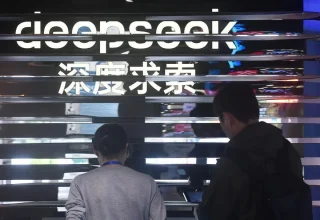
Chinese AI companies are racing to launch new models over the Lunar New Year holiday, aiming to spark the next “DeepSeek moment” in generative AI innovation.
A recently leaked test version, Pony Alpha, drew wide attention for its exceptional coding performance. On Thursday, it was confirmed to be GLM-5, developed by Beijing-based Zhipu AI. During its stealth-testing period, GLM-5 reportedly scored highly on major AI agent benchmarks and performed successfully in multiple agent flows, highlighting growing confidence among Chinese developers.
Meanwhile, Beijing firm Moonshot unveiled its Kimi 2.5 release late last month. The open-source model impressed the AI community with strong performance across coding, image, video, and general intelligence tasks, while promising 90 percent cost savings compared to proprietary alternatives. Silicon Valley analyst Chamath Palihapitiya described it as “incredibly profound.”
Other companies are also accelerating innovation. DeepSeek has begun a gray-scale test on its app and web interfaces, expanding its context window from 128K to one million tokens, signaling a major upgrade. ByteDance launched Seedance 2.0, a text-to-video tool capable of generating multi-shot film sequences in around 60 seconds, which has already sparked a global short-video creation trend. Game developer Feng Ji called the tool a sign that “the childhood era of AIGC is over.”
Alibaba’s AI division also rolled out Qwen-Image 2.0, a next-generation open-source image generation model supporting AI tools for the 2026 Milan Winter Olympics.
China’s tech giants including Alibaba, Tencent, and ByteDance are leveraging the holiday season to attract users and expand their AI ecosystems, moving from R&D to consumption.
According to the China Internet Network Information Center, by the end of 2025, China had 1.125 billion internet users, of which 602 million were using generative AI technologies a 141.7 percent increase from 2024.