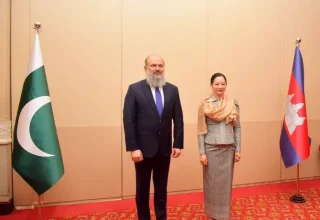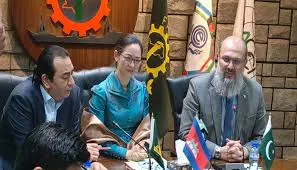
The Federation of Pakistan Chambers of Commerce and Industry (FPCCI) on Tuesday hosted a business engagement in honour of Cham Nimul, Minister of Commerce of the Kingdom of Cambodia, aimed at advancing Pakistan–Cambodia trade, investment and private-sector linkages.
The session featured addresses by Federal Minister for Commerce Jam Kamal Khan, Cambodian Commerce Minister Cham Nimul and FPCCI President Atif Ikram Sheikh, followed by a vote of thanks.
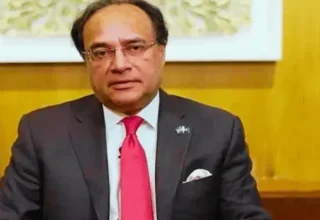
Federal Minister for Commerce Jam Kamal Khan thanked FPCCI for convening the engagement and paid tribute to the resilience of Pakistan’s business community amid recent economic challenges, including high inflation, elevated interest rates and foreign exchange volatility.
He said Pakistan’s foremost challenge now is growth, which depends on competitiveness, investment and fiscal space, and noted that the upcoming federal budget would be crucial for improving the cost and ease of doing business.
Outlining Pakistan’s approach to trade diplomacy, the minister said official engagements are increasingly being linked with structured business-to-business forums and sectoral matchmaking, resulting in 60 to 70 business agreements during recent interactions.
Highlighting investment priorities, he pointed to gaps in naphtha cracking, steel, pharmaceutical APIs, refineries and mineral processing, and said the government is preparing a comprehensive investment portfolio along with an upcoming MDI programme to attract investment from partners including the Gulf, China and the United States.
He described Pakistan as a potential regional hub with connectivity to Central Asia and highlighted opportunities for collaboration, including Cambodia’s yarn imports and Pakistan’s spinning capacity.
In her remarks, Cambodian Commerce Minister Cham Nimul thanked FPCCI and the Government of Pakistan for the hospitality extended to her delegation during its first visit and said Pakistan’s recent economic journey reflects a strong story of resilience.
She said Cambodia is examining reforms to strengthen coordination among business associations and expressed interest in deeper chamber-to-chamber cooperation, including mechanisms to facilitate business engagement even before the full establishment of an embassy presence.
Highlighting complementarities, she noted that Pakistan’s textile value chain is vertically integrated from spinning and yarn to fabrics, while Cambodia is stronger in downstream segments, offering scope for partnerships that can build backward linkages.
She also noted that pharmaceuticals and medical equipment constitute a major share of Cambodia’s imports from Pakistan and suggested exploring facilitation mechanisms, including the concept of a dedicated arrangement or zone to encourage Pakistani pharmaceutical investment and operations. She added that Cambodia could serve as a gateway for Pakistani businesses to ASEAN and RCEP markets, emphasizing that the relationship must remain a two-way street supported through government-to-government, business-to-business and government-to-business cooperation.
FPCCI President Atif Ikram Sheikh underscored the importance of regional connectivity and sustainable trade, stating that Pakistan–Cambodia relations hold untapped potential in agriculture, rice, food processing, textiles, pharmaceuticals, light engineering, tourism and logistics.
He said FPCCI stands ready to facilitate B2B linkages, exhibitions, investment matchmaking and systematic follow-up with relevant stakeholders to expand bilateral trade volumes and market access.
In the concluding segment, FPCCI, citing the absence of a Cambodian embassy in Pakistan and reflecting the business community’s recommendation, proposed the appointment of Asif Ikram Sheikh as Honorary Consul General of Cambodia to facilitate closer coordination between the two sides.