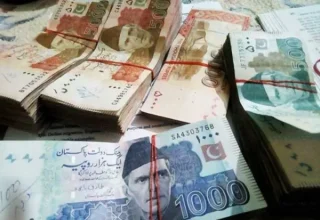
The Economic Coordination Committee (ECC) of the federal cabinet has approved the auction of 500,000 tons of wheat held by the Pakistan Agricultural Storage and Services Corporation (PASCO) and the supply of 300,000 tons of wheat to the Punjab government, a move expected to cause a financial loss of Rs20.5 billion to Rs22 billion to the national exchequer.
According to official sources, the wheat to be auctioned includes 300,000 tons of expensive imported wheat, which the ECC has allowed to be sold at subsidised rates. The decision was taken at an ECC meeting chaired by Finance Minister Muhammad Aurangzeb.
Officials said PASCO imported 294,994 metric tons of wheat in 2022, which is still lying in its warehouses. The decision comes at a time when the federal government has already decided to wind up PASCO.
The ECC approved the disposal of 500,000 tons of PASCO wheat through competitive bidding, stating that the objective was to offload surplus stocks, reduce storage costs, stabilise prices in the domestic wheat market and ensure food security.
The Finance Division had proposed a reserve price of Rs4,742 per 40 kilograms for locally procured wheat and Rs6,425 per 40 kilograms for imported wheat. However, the ECC approved lower reserve prices of Rs4,400 per 40 kilograms for local wheat and Rs4,070 per 40 kilograms for imported wheat.
At this approved rate, the sale of imported wheat will result in a loss of Rs2,355 per 40 kilograms. Officials informed the ECC that disposing of 500,000 tons of wheat at these prices could lead to a total financial loss ranging between Rs20.5 billion and Rs22 billion.
At the same time, the committee was told that storing such a large quantity of wheat costs more than Rs11 billion annually. PASCO currently holds around 2 million tons of wheat, and the federal cabinet decided last month to shut down the organisation.
Sources said the decision highlights weak economic and trade planning, as the government first imported wheat at high prices and is now forced to sell it with heavy subsidies. The Ministry of Finance will provide around Rs20 billion in subsidies to clear the wheat stocks, including an immediate payment of Rs9 billion.
The ECC was also informed that the imported wheat stock from 2022 has been gradually losing its market value compared to fresh arrivals, while storage expenses continue to rise.
To ensure adequate wheat supply to flour mills, maintain price stability and guarantee uninterrupted availability of wheat flour for consumers, the ECC also approved the supply of 300,000 tons of PASCO wheat to the Punjab government.
Punjab had requested the wheat at a rate of Rs3,900 per 40 kilograms, while PASCO’s cost stands at Rs4,742 per 40 kilograms. The matter was referred to Deputy Prime Minister Ishaq Dar, who allowed the sale at Rs4,150 per 40 kilograms. The ECC formally endorsed this decision on Wednesday.
As a result, the federal government will bear a loss of Rs4.4 billion on the sale of 300,000 tons of wheat to Punjab.
In addition, the ECC approved a technical supplementary grant of Rs10.98 billion to clear outstanding dues of utility companies owed by Pakistan Post Office.
A technical supplementary grant of Rs29.663 billion was also approved for the Federal Directorate of Immunisation to ensure the supply of vaccines for children.
The committee decided to share the subsidy on imported urea between the federal and provincial governments on a 50-50 basis and approved Rs23.42 billion for this purpose. Of this amount, Rs15 billion will be released by the federal government, while the remaining amount will be subject to fiscal space.
Grants of Rs1.9 billion for development projects in Khyber Pakhtunkhwa under the Ministry of Housing and Rs150 million for Cadet College Hassan Abdal were also approved. The ECC further allowed the provision of solar panels confiscated by the Federal Board of Revenue to the Gilgit-Baltistan government.
Finance Minister Muhammad Aurangzeb, during a meeting with German Ambassador Alfred Grannas, said the government was taking steps to stabilise the macroeconomy, ensure fiscal sustainability and promote competitiveness. He said structural reforms were being implemented in several sectors, including taxation.
Both sides reaffirmed their commitment to deepening economic ties, promoting a stable, transparent and predictable business environment, and strengthening the long-standing partnership between Pakistan and Germany through continued dialogue and cooperation.