China has successfully conducted its first metal 3D printing experiment in space, marking a major advancement in the country’s in-orbit manufacturing capabilities.
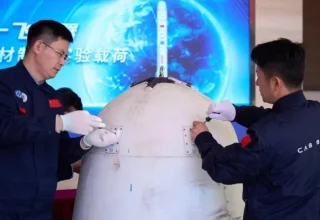
The experiment was carried out using a retrievable scientific payload developed by the Institute of Mechanics under the Chinese Academy of Sciences (CAS), the CAS announced on Saturday.
The payload flew aboard the Lihong-1 Y1 suborbital vehicle, a commercial recoverable spacecraft developed by CAS Space, a Chinese aerospace enterprise focused on space tourism. The spacecraft completed its inaugural test flight from the Jiuquan Satellite Launch Center in northwest China on January 12.
After crossing the Karman line and reaching an altitude of approximately 120 kilometers, the payload autonomously fabricated metal components in a microgravity environment.
The CAS said this achievement represents a shift of China’s space-based metal additive manufacturing technology from “ground-based research” to “in-space engineering verification,” positioning it at the forefront of global technology.
Conducting metal 3D printing in space is significantly more complex than on Earth. The research team overcame challenges related to stable material transport under microgravity, full-process closed-loop control, and reliable coordination between the payload and the launch vehicle.
The payload capsule safely returned to Earth with a parachute-assisted landing, providing scientists with first-hand data on the melt pool dynamics, material transport, solidification behavior, geometric precision, and mechanical properties of space-printed parts.
The Lihong-1 Y1, praised for its low launch cost and flexibility, will be developed for multiple reuses. Its deputy chief designer, Wang Yingcheng, said ongoing tests aim to add crew life-support and high-reliability escape systems, enhancing the spacecraft’s capabilities for both suborbital scientific experiments and commercial space tourism.
The onboard payload also included rose seeds for an agricultural research experiment, highlighting the versatility of the mission.