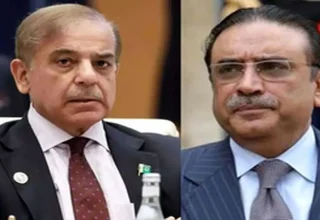
Pakistan marked Right to Self-Determination Day with strong statements from top leadership reaffirming solidarity with the people of Indian Illegally Occupied Jammu and Kashmir (IIOJK). Prime Minister Shahbaz Sharif, President Asif Ali Zardari, Deputy Prime Minister and Foreign Minister Ishaq Dar, and Interior Minister Mohsin Naqvi all highlighted India’s ongoing violations of international law and called on the international community to act.
Prime Minister Shahbaz Sharif said January 5 marks the day when the United Nations Security Council recognized the right to self-determination of the Kashmiri people. Recalling that the UN Commission for India and Pakistan passed a historic resolution on January 5, 1949, Shahbaz Sharif noted that it called for the future of Jammu and Kashmir to be determined through a free and impartial referendum. He expressed regret that the promise could not be fulfilled due to India’s illegal occupation of the region.
“The people of occupied Kashmir have faced atrocities by Indian forces for over eight decades, but Indian repression has failed to break their resolve,” he said, urging the international community to take concrete steps to end India’s oppressive actions in Kashmir.
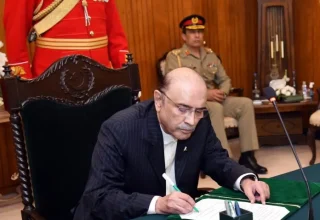
President Asif Ali Zardari also issued a special message, emphasizing that the Kashmiri struggle continues even after seven decades. He said that UN resolutions on the Jammu and Kashmir dispute remain valid and enforceable, and that India’s continued denial of Kashmiri voting rights constitutes a violation of international law.
President Zardari highlighted the severe human rights situation in IIOJK, including restrictions on political freedoms, violence, displacement, and the creation of a climate of fear through oppressive laws and prolonged detention. He also warned that using water as a political weapon and India’s unilateral suspension of the Indus Waters Treaty pose serious threats to regional stability. He stressed that the Kashmir dispute can only be resolved through dialogue and UN resolutions, not force, and that sustainable peace in South Asia depends on a fair resolution.
The Deputy Prime Minister and Foreign Minister reaffirmed Pakistan’s unwavering solidarity with the Kashmiri people, describing the UN resolution of 5 January 1949 as a historic guarantee of a free and impartial plebiscite. He condemned India’s unilateral actions of 5 August 2019, calling them attempts at demographic engineering designed to disenfranchise Kashmiris in their own homeland. The statement emphasized that Pakistan will continue to extend moral, political, and diplomatic support until the Kashmiri people’s inalienable right to self-determination is realized, and urged the international community, particularly the UN, to honor its commitments.
Interior Minister Mohsin Naqvi expressed complete solidarity with the oppressed Kashmiri people, calling January 5 a historic reminder of the day the UN recognized their right to self-determination. He described IIOJK today as a vivid picture of helplessness and oppression, calling it the world’s largest prison where freedom has been completely curtailed. Naqvi condemned India’s attempts to crush Kashmiri self-determination through force as blatant violations of international law and democratic principles, highlighting the “double standards and criminal silence” of the global community.
The Interior Minister reaffirmed that Pakistan has always been a strong supporter of the Kashmiri people’s right to self-determination at principled, moral, and diplomatic levels and will continue its unwavering support in the future.
Pakistan observes Right to Self-Determination Day annually on January 5, commemorating the historic UN resolution of 1949 and highlighting the ongoing struggle of the Kashmiri people against decades of oppression.