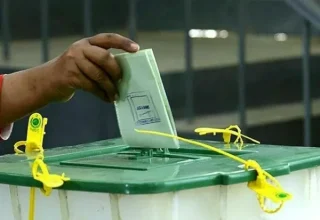
Preparations for the 2026 local government elections in Punjab have entered a decisive phase, with the provincial government issuing a fresh notification detailing the administrative structure of divisions, districts and tehsils across the province.
According to the notification, Punjab now comprises 10 divisions, 41 districts and 156 tehsils. The move is being described as a key step toward holding local body elections in the new year, with delimitation of union councils scheduled for January and February 2026.
The Rawalpindi Division has emerged as the largest in terms of tehsils, with a total of 24 tehsils spread across six districts: Rawalpindi, Murree, Chakwal, Attock, Jhelum and Talagang. Lahore Division follows closely with 22 tehsils across four districts Lahore, Kasur, Sheikhupura and Nankana Sahib.
The notification also includes newly created administrative units, with Kot Addu recognized as a district and Chowk Sarwar Shaheed notified as a tehsil, reflecting recent administrative restructuring in southern Punjab.
Gujranwala Division, comprising the districts of Gujranwala, Sialkot and Narowal, has 11 tehsils. Gujrat Division includes four districts Gujrat, Hafizabad, Mandi Bahauddin and Wazirabad and with a total of 12 tehsils.
Multan Division consists of four districts Multan, Lodhran, Vehari and Khanewal and 14 tehsils. Sahiwal Division has three districts Sahiwal, Pakpattan and Okara with seven tehsils.
Bahawalpur Division includes three districts Bahawalpur, Bahawalnagar and Rahim Yar Khan and 15 tehsils. Dera Ghazi Khan Division, one of the largest geographically, comprises six districts Dera Ghazi Khan, Taunsa, Rajanpur, Layyah, Muzaffargarh and Kot Addu with 16 tehsils.
Faisalabad Division consists of four districts Faisalabad, Jhang, Chiniot and Toba Tek Singh and 17 tehsils, while Sargodha Division includes four districts Sargodha, Khushab, Mianwali and Bhakkar with a total of 18 tehsils.
Election officials say the completion of administrative notifications will allow election authorities to move forward with constituency delimitation and logistical planning, a crucial requirement ahead of the long-awaited local government polls.