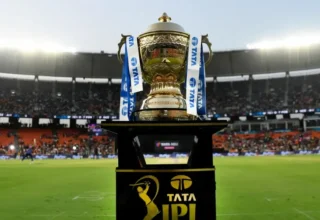
The Indian Premier League (IPL) has seen a 20 percent drop in its commercial value in 2025, falling to $9.6 billion from $12 billion in 2024, according to reports by Brand Finance and The Economic Times. Analysts attribute the decline to regional geopolitical tensions and uncertainties surrounding the upcoming IPL auction.
The reports noted that security concerns during the conflict led to a week-long suspension of approximately 16 matches, including the knockout stages. This temporary halt disrupted the pace of the tournament and dented market confidence, affecting broadcasting, advertising, and overall commercial momentum.
Restrictions on real-money online gaming advertisements further intensified the financial pressure, removing a significant sponsorship category. Scheduling conflicts with the 10th edition of the Pakistan Super League, uncertainty around the IPL auction, and withdrawals of crypto-linked advertising and financial partners also contributed to instability.
According to D&P Advisory, the IPL’s two-year revenue trend shows a consistent decline, with valuations dropping from 92,500 crore rupees in 2023 to 76,100 crore rupees in 2025. The advisory highlighted structural challenges, including industry consolidation and government restrictions on gaming sponsorships, as factors affecting long-term growth.
At the franchise level, 9 out of 10 teams reported declines in brand value. Mumbai Indians remained the most valuable team at $108 million, despite a 9 percent drop. Royal Challengers Bangalore stood at $105 million (down 10 percent), Chennai Super Kings fell 24 percent to $93 million, and Kolkata Knight Riders dropped 33 percent to $73 million. Sunrisers Hyderabad and Rajasthan Royals saw decreases of 34 percent and 35 percent, respectively.
Gujarat Titans were the only team to report a 2 percent increase, reaching $70 million.
Despite these setbacks, Chennai Super Kings maintained the strongest brand strength, while Mumbai Indians continued to hold the title of the most valuable IPL brand overall. Analysts concluded that the combined impact of regional tension, match disruptions, and auction-related uncertainty created immediate pressure on valuations, while structural factors curtailed long-term growth momentum.