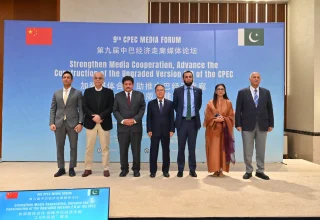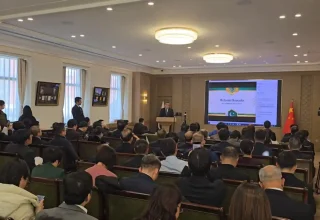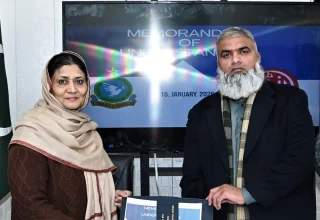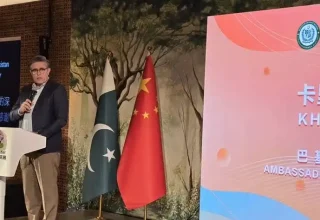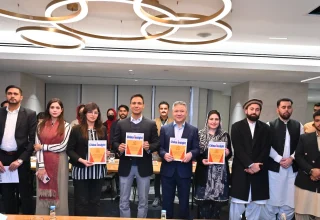
ISLAMABAD (Internews Pakistan): Pakistan-China Institute (PCI), under its flagship initiative “Friends of Silk Road,” organized a conference titled “The Five-Year Plan and China-Pakistan Future: Innovation, Youth Development, and Shared Opportunities” in Islamabad today.
The event brought together young influencers, journalists, researchers, and diplomats to discuss how China’s new Five-Year Plan, green development and self-reliance agenda can translate into opportunities for Pakistan’s youth and economy.
In his opening remarks, Executive Director PCI, Mustafa Hyder Sayed, underscored that a key message emerging from the recent plenary session of the Communist Party of China is “self-reliance,” which he described as central to “the rejuvenation of Chinese civilisation” after the “hundred years of humiliation.” He emphasised that this drive for self-reliance “is a very important opportunity for countries like Pakistan to engage with China, particularly through the Belt and Road Initiative, of which CPEC is a very important part,” provided Pakistan ensures a stable security environment to attract relocating Chinese industries.
Mustafa Hyder Sayed highlighted China’s leadership in green development at a time when “the world is facing an existential threat to life because of climate change” and when some countries are “withdrawing from international partnerships and the Paris Agreement.” Pointing to electric vehicles, renewable energy and green technologies, he said that “China is trailblazing in the realm of green development,” and that Pakistan, as an agrarian economy vulnerable to flash floods and droughts, must seize this “very important opportunity to learn and partner with China.”
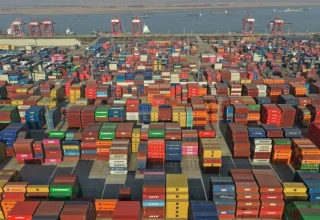
He also drew attention to the potential of industrial relocation from China’s coastal provinces to Pakistan, noting that “hundreds and thousands of medium-sized enterprises from Guangdong and Zhejiang” are looking to move to new markets. “ASEAN countries are seizing this opportunity, but we have yet to seize it,” he warned, adding that Pakistan already has a ready-made platform in the China-Pakistan Economic Corridor: “It is not something new. It is an advanced mechanism which is there, with companies ready to come here, provided we have a stable security environment.”
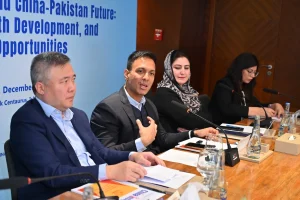
Speaking on the evolution of China’s planning system, Nabila Jaffer, Head of China Study at the Institute of Regional Studies (IRS), explained that China is now preparing its 15th Five-Year Plan through a comprehensive process that “involves people from the grassroot level to the top level in the process of planning.” She noted that Chinese planning is “multi-sectoral and comprehensive,” covering every area related to economic development, improving people’s livelihoods and “engaging constructively with the outside world.”
Tracing China’s development trajectory, Nabila Jaffer reminded participants that when the People’s Republic of China was founded in 1949, “the two most important challenges were health and education,” with life expectancy at just 37 years. She underlined how Chairman Mao’s early focus on basic health services and compulsory nine-year education laid the foundation for later reforms, which from the 1980s onwards shifted China from a command economy and collective agriculture to market-oriented reforms, integration into global trade and, by 2001, WTO membership and rapid development.
Journalist and anchor at Independent Urdu, Sehrish Qureshi, focused on how Pakistan can practically benefit from China’s Five-Year Plans and innovation-driven growth model. She identified “innovation as a core driver of the economy,” noting that China “started from scratch” and, through belief in the “Made in China” vision, has risen to stand “among the top five economies of the world,” offering lessons for Pakistan as a developing country.
She stressed that Chinese technology cooperation has already strengthened Pakistan’s security and global standing, observing that “we protected our land, we protected our honor in the global arena because of those technologies” built and shared by China. Drawing on her experience training journalists in Khyber Pakhtunkhwa and Balochistan on CPEC reporting, she highlighted the importance of “countering misinformation and disinformation” about China and CPEC through responsible media and fact-based narratives.
Social media influencer Jehad Zafar underlined the positive impact of Chinese projects in Pakistan and the need to debunk unfounded criticism. He remarked that “there is no significant report which says that the coal projects under CPEC have harmed Pakistan,” yet misinformation is rife, making it essential for media professionals and influencers to “spread more and more positive impact of Chinese investment in Pakistan” and “debunk fake news and misinformation” about China-Pakistan cooperation.
Jehad Zafar also stressed that “this is the century of Asia, and China is leading in all these developments,” calling on regional countries to join groupings such as SCO, BRICS and the BRI “for the betterment of this region.” Praising China’s role in facilitating dialogue between countries like Saudi Arabia, Iran, Pakistan and Afghanistan, he argued that “peace is a very important aspect” because “without peace we cannot pursue our regional connectivity goals,” and urged Asian governments to prioritise work ethic and human resource development, which he described as “the actual power” behind China’s rise.
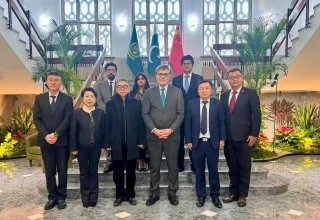
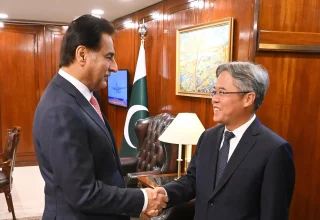
His Excellency Yang Nuo, Minister Counsellor at the Embassy of the People’s Republic of China in Islamabad, described the conference as “very unique,” saying it felt “like a gathering of families, brothers and sisters,” and welcoming the strong presence of young people who “in China mean future and hope.” Recalling Chairman Mao’s famous remark to students that youth represent “the world at eight or nine o’clock in the morning,” he said he was moved by the participants’ “sincere feelings towards China” and “very good constructive suggestions.”
Acknowledging the challenges of misinformation in the digital age, Yang Nuo stressed that “communication and interaction are very important, especially when there is so much fake news.” He endorsed the idea of setting up a WhatsApp group of influencers and media participants so they can “put forward good suggestions” and help strengthen China-Pakistan cooperation. While recognising that “everyone talks about CPEC” and that it “may be a game changer,” he cautioned that “CPEC is not the only solution” and that long-term success requires “continuous investment and a very good environment,” including improved security and joint efforts from both sides.
The conference was attended by students, researchers, media professionals, podcasters, and social media influencers, who engaged in an interactive discussion on innovation, youth development and the future of China-Pakistan cooperation. Pakistan-China Institute reaffirmed its commitment, through Friends of Silk Road, to providing a platform that connects policymakers, youth and opinion-makers to build a shared future based on connectivity, green development and people-to-people ties.