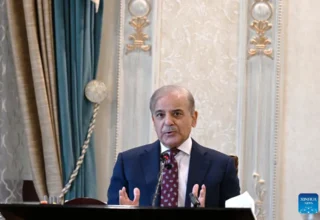
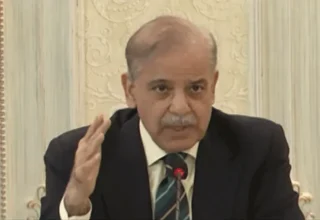
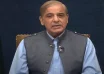
Pakistani Prime Minister Shehbaz Sharif on Monday strongly condemned Israeli attacks on Iran, expressing deep sorrow over the killing of innocent people and Iranian leadership, including Supreme Leader Ali Khamenei, while announcing sweeping austerity measures to cope with the global fuel crisis triggered by the US-Israel war on Iran.
Addressing the nation, the prime minister said the Government and people of Pakistan were deeply saddened by the loss of lives in the attacks. “We condemn these attacks in the strongest and most unequivocal terms,” he said.
The premier also condemned attacks that affected several Muslim brotherly countries in the region, including Saudi Arabia, United Arab Emirates, Qatar, Oman, Lebanon, Bahrain, and Azerbaijan, warning that the escalating conflict posed a serious threat to regional stability.
Sharif said Pakistan was making diplomatic efforts to help defuse tensions in the region. He added that he had spoken to the leaders of several affected countries and conveyed that Pakistan stood shoulder to shoulder with them. “We consider the stability and security of these countries as the stability and security of our own country,” he said.
The prime minister noted that the conflict had pushed global oil prices above $100 per barrel, creating serious economic challenges for countries dependent on energy imports. Pakistan, he said, relies heavily on oil and gas supplies from the Gulf region, making the country vulnerable to global price shocks.
In response to the emerging fuel crisis, the government announced a series of austerity measures aimed at reducing fuel consumption and controlling public expenditure.
Sharif said that for the next two months, fuel allowances for official vehicles would be reduced by 50 percent, while 60 percent of vehicles used by government departments would remain off the roads. Ambulances and public transport services would be exempt from these restrictions.
He added that members of the federal cabinet would forgo their salaries for the next two months, while the salaries of parliamentarians would be reduced by 25 percent. Additionally, two days’ salary from government officials in grade 20 and above earning more than Rs300,000 per month would be allocated for public welfare.
The prime minister said government departments would cut their expenditures by 20 percent, while the purchase of vehicles, furniture, air conditioners and other non-essential items had been banned. Foreign visits by ministers, advisers and officials would also be restricted except where deemed essential for national interests.
To further conserve fuel and energy, Sharif said teleconferencing and online meetings would be encouraged, while official dinners and iftar gatherings had been prohibited. Government seminars and conferences would be held within official premises instead of hotels.
He also announced measures affecting the public and private sectors, including a policy under which 50 percent of employees would work from home except in essential services. Offices would operate four days a week, although banks would remain exempt from the restriction.
Schools across the country would have two weekly holidays, while higher educational institutions would shift to online classes. A two-week break for all schools would also begin at the end of the week, he said, adding that directives had been issued to provincial governments to implement the measures.
The prime minister warned oil hoarders and profiteers against exploiting the crisis, saying strict legal action would be taken against those attempting to create artificial shortages or manipulate prices.
Sharif said Pakistan was also confronting terrorism along its western borders, adding that the armed forces were dealing with the challenge under the leadership of Asim Munir.
Despite the economic pressures, he assured the nation that the government was making every effort to protect citizens from excessive financial burden. While acknowledging that the recent increase in petroleum prices was a difficult decision, the premier said the government had tried to limit the impact on the public.
He noted that Pakistan had come close to default in the recent past but had managed to stabilize the economy with public support, adding that inflation had declined, the currency had stabilized and electricity prices had also been reduced.
Concluding his address, the prime minister urged national unity in the face of emerging global challenges, saying Pakistan would continue working to protect its economic stability while pursuing diplomatic efforts to ease tensions in the region. — LORD