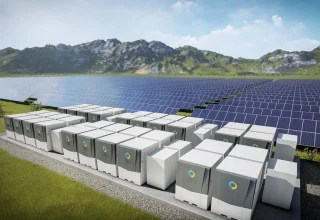
Energy experts have urged policymakers to incentivize grid-scale battery storage instead of discouraging solar expansion, arguing that storage is the missing link in stabilizing the country’s power system and reducing reliance on costly fossil fuels.
They noted that over the past decade, Pakistan has expanded rooftop solar installations, wind power in Sindh, and hydropower capacity. However, the structural imbalance persists: surplus clean electricity is generated during daytime hours, while imported fossil fuels are used to meet evening peak demand.
According to industry estimates, fossil fuel imports account for a significant share of the national economy, driven largely by expensive peak-time generation, particularly LNG-based plants operating for limited hours at high costs. At the same time, distributed solar systems produce substantial annual electricity, much of which cannot be effectively utilized after sunset.
Experts said recent net-metering reforms introduced by the National Electric Power Regulatory Authority aim to reduce pressure on distribution companies. While concerns regarding cross-subsidization are being discussed, they warned that slowing rooftop solar growth without introducing structural solutions could undermine investor confidence. They emphasized that the core challenge is not solar generation, but the absence of storage infrastructure.
They described Battery Energy Storage Systems (BESS) as the critical solution for storing surplus daytime electricity and supplying it during peak hours, thereby reducing dependence on costly fossil generation. Even modest displacement of peak thermal generation, they added, could generate substantial annual fuel savings and improve grid stability.
Policy analysts suggested that Pakistan should shift focus toward incentivizing storage deployment rather than imposing restrictions on distributed generation. They proposed integrating storage procurement under the National Transmission and Despatch Company introducing ancillary service markets, and implementing time-of-use tariff structures to reward peak-hour discharge.
Experts pointed to global examples where storage integration has enhanced grid reliability, reduced renewable curtailment, and strengthened fiscal discipline. They stressed that commercially available storage technologies are already suitable for deployment in emerging markets, provided regulatory and financial frameworks support investment.
They also highlighted the importance of environmental durability, scalable system design, and integrated energy management platforms to ensure long-term performance and reduce operational risks. Unified storage systems combining batteries, power conversion units, and management software were described as essential for simplifying commissioning and maintenance.
From a public finance perspective, analysts argued that phased storage investments under public-private partnerships, supported by climate financing, could yield significant fuel savings and reduce capacity payments to inefficient peaking plants. They said such investments could recover costs within a few years if peak fossil generation is meaningfully reduced.
Concluding the debate, experts maintained that Pakistan’s energy challenge is not a shortage of renewable resources but a balancing issue. They said grid-scale battery storage represents the most viable instrument for converting solar surplus into economic savings, improved reliability, and greater energy security.
They emphasized that future energy policy must prioritize structural optimization, adding that incentivizing storage is now an economic necessity rather than a policy option.